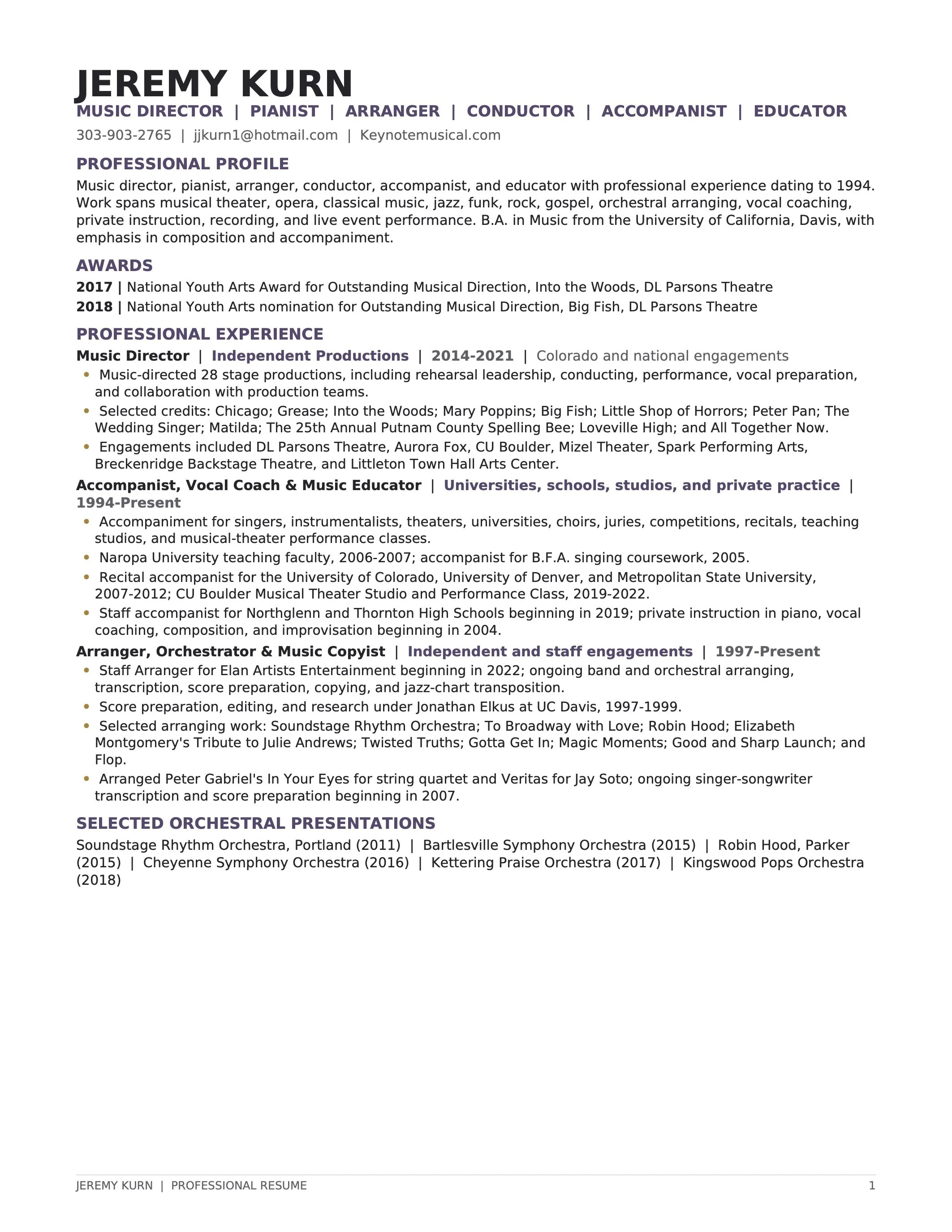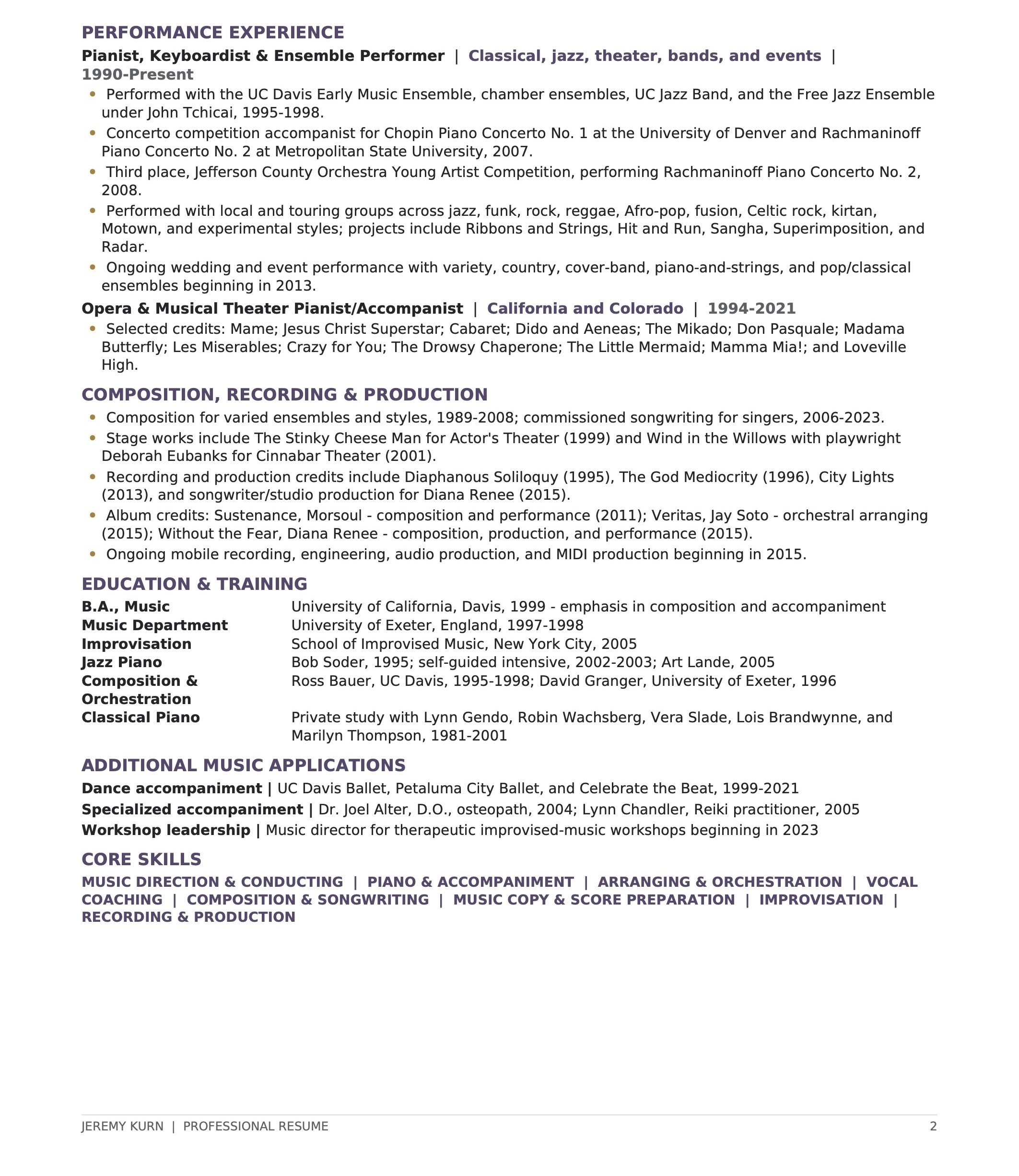
Jeremy Kurn is a pianist, composer, arranger, music director, consciousness educator, and psychedelic-informed music practitioner whose work brings together professional musicianship, contemplative practice, altered-state practice, and the interdisciplinary study of consciousness.
Raised in Northern California by a Jewish Buddhist neurologist, Jeremy began studying piano at the age of three. By adolescence, he was performing classical music, jazz, and musical theater while independently exploring meditation, prayer, and fundamental questions about consciousness and the nature of reality.
Jeremy earned a B.A. in Music from the University of California, Davis, with an emphasis in composition and accompaniment, and also studied through the University of Exeter Music Department and the School for Improvised Music in New York. His early work as an accompanist taught him to perceive and respond to a musician’s breathing, movement, phrasing, emotional tone, and moment-to-moment intention. This sensitivity to the whole person—not only to the musical score—became the foundation of his later work in responsive improvisation and musical attunement.
During and after university, Jeremy traveled extensively and undertook residential periods of practice in Hindu and Buddhist ashrams. In the early 2000s, he entered a sustained mentorship with Joel Alter, D.O., a retired surgeon and practitioner of osteopathic and craniosacral bodywork. Their work encompassed contemplative disciplines, philosophy, consciousness, healing arts, body mechanics, psychedelic history, and the therapeutic applications of altered states. Jeremy also provided live improvised piano during Alter’s hands-on bodywork sessions, responding to participants’ breathing, movement, emotional tone, and relational process. These experiences introduced the central principle that continues to guide his work: music can give audible form to a person’s present experience while supporting the emergence of new possibilities for feeling, insight, agency, and integration.
A formative meeting with pianist and composer Art Lande inspired Jeremy to move to Colorado in 2002 and commit more deeply to improvised music. He later studied jazz piano with Lande and co-created The Left Channel, a fully improvised experimental ensemble that performed with a consistent lineup for four years. His long collaboration with trumpeter, electronic musician, and theology student Chris Mandel extended into philosophical dialogue, contemplative practice, altered-state exploration and community education projects including the online Thinker’s Speakeasy. During this period, Jeremy maintained an intensive qigong and meditation practice while living in the foothills of the Rocky Mountains.
Alongside this inner work, Jeremy built a professional music career spanning more than three decades. He has worked across classical music, jazz, funk, gospel, musical theater, orchestral arranging, popular music and experimental improvisation, as a pianist, accompanist, arranger, conductor, teacher, and music director. His experience includes more than seventy stage productions and seven large-format musicals for which he served as sole arranger, rehearsal director, conductor, and performing pianist. He has also arranged for singers, bands, big bands, theater companies, and orchestral ensembles; accompanied university and professional musicians and classical concerto soloists; and maintained a long-term private teaching and coaching practice. In 2017, he received a National Youth Arts Award for Outstanding Musical Direction for Into the Woods.
Nature has been equally important to Jeremy’s contemplative development. Years of backpacking and solitary practice in the mountains became a setting for cultivating inner silence, stillness, emptiness, and an embodied relationship with the sacred. This experience led him beyond the religious framework of his upbringing and into sustained study of comparative religion, mythology, neurotheology, cognitive science, psychology, philosophy of mind, cultural evolution, ethnomusicology, spiritual practice, and the cultural and therapeutic history of psychedelics. His current writing develops an embodied systems account of how perception, feeling, identity, and creative agency arise.
During the pandemic, Jeremy founded Superimposition, a funk-jazz fusion project centered on collaborative improvisation and personal expression. He also undertook a year-long immersion in funk-gospel music at House of Hope, a Pentecostal congregation in East Denver, learning and performing new repertoire each week. These experiences helped bring his musical, contemplative, relational, and altered-state practices into a more unified approach to playing.
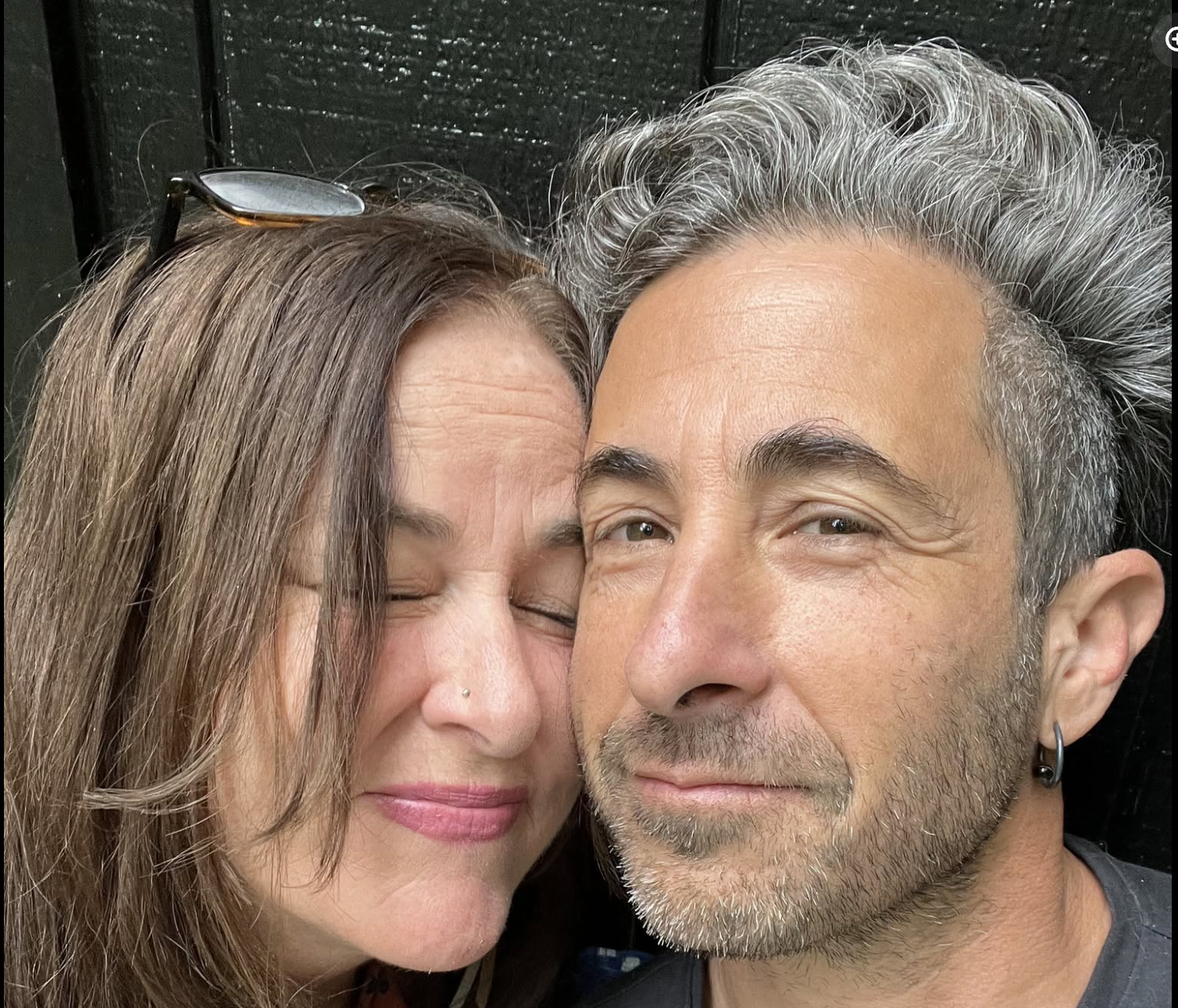
Jeremy now lives with his partner, Kate, on a restored intentional-community property in Oregon. Through Reflexivity Studios, he is developing practices, training programs, ensembles, and collaborative experiences at the intersection of music, consciousness, spirituality, psychedelics, and healing. His current projects include Spaceflower, a responsive free-improvisation ensemble; the Musical Self-Emergence Method; training for musicians in flow, musical reflection, and ceremonial musicianship; and his forthcoming book, Playing in the Flow: Music and Primordial Consciousness.
Across these projects, Jeremy’s work is organized around a common aim: helping people become more aware of the processes shaping their experience, recover a more integrated relationship with themselves, and participate more deliberately in the creation of who they are.
• Biography •
• Resume •